Formerly Maida Custom Vision | Serving Northeast Florida since 1995
Key Takeaways:
LASIK risks range from common, temporary side effects, like dry eye and glare, to genuinely rare complications, with serious outcomes occurring in under 1% of properly screened cases.
Most side effects resolve within weeks to months as your eyes heal; the rare, serious risks are usually tied to pre-existing factors that screening is designed to catch.
Florida Eye Custom Vision’s Jacksonville surgeons use advanced diagnostics to identify and minimize your individual risk before ever recommending surgery.
If you’re considering LASIK, you likely want a straight answer to one question: are there any LASIK risks that should concern you? At Florida Eye Custom Vision, we hear this question at nearly every Jacksonville consultation, and the honest answer is more reassuring than most searches suggest. Serious complications are rare, satisfaction rates are consistently high, and most side effects are mild and temporary.
The side effects you’re most likely to experience after LASIK are mild and short-lived, part of your eye’s normal healing process rather than a lasting problem.
Dry Eye.Research shows roughly 28% of patients with no prior dry eye symptoms develop mild to moderate dryness within the first 3 months, typically improving with preservative-free tears as your eyes heal.
Glare, Halos, or Starbursts. Especially noticeable at night during early healing, these visual effects generally fade within the first few months as your cornea stabilizes and your brain adjusts to sharper input.
Fluctuating or Hazy Vision. Vision may shift slightly or appear briefly foggy in the first weeks as tear film and corneal healing progress, settling once healing completes.
Light Sensitivity or Mild Discomfort. Many patients notice temporary sensitivity to bright light or a gritty, scratchy feeling in the first few days, both of which typically ease quickly with lubricating drops. It’s a level of discomfort most patients manage with over-the-counter relief, not prescription pain medication, which is worth knowing if you’re curious what LASIK actually feels like.
Recovery Tip: The single biggest factor in how fast these effects fade is consistent use of your prescribed drops; patients who stick to their drop schedule in the first weeks typically see symptoms resolve faster than those who skip doses once their eyes start feeling better.
The risks of laser eye surgery are lower than most searches suggest, and the confusion usually comes from conflating “new symptoms” with true complications.
Undercorrection, Overcorrection, or Regression. Patients with higher original prescriptions are more likely to need a follow-up enhancement to fine-tune their results, and more prone to gradual myopic regression, a slow drift back toward the original prescription that plays out over years. For most patients, this amounts to a fraction of a diopter per year, minor enough that it rarely affects daily life. It’s worth understanding what “permanent” actually means with LASIK, since the correction itself doesn’t reverse, even when minor regression occurs.
Flap-Related Issues. With modern all-laser, blade-free technology, complications like flap wrinkling or displacement are uncommon and most often caused by later trauma to the eye when they do occur. Prompt care resolves the large majority of cases fully.
Epithelial Ingrowth. Occasionally, surface cells grow beneath the corneal flap. Most cases are mild and resolve on their own; when treatment is needed, it’s a straightforward in-office procedure.
Diffuse Lamellar Keratitis (DLK). A mild inflammation that can develop beneath the flap in the days after surgery, DLK responds well to steroid drops when caught early at your routine follow-up visits.
Infection. Occurring in roughly 1 in 1,000 to 1 in 10,000 cases, infection after LASIK is significantly rarer than the infection risk reported among long-term contact lens wearers.
The Real Number: Serious LASIK complications occur in about 0.4% of eyes in large contemporary studies, and vision-threatening events are rarer still.
The rare, serious LASIK risks below are genuinely uncommon, and naming them honestly is part of good care.
Corneal Ectasia. A progressive weakening and bulging of the cornea, occurring in an estimated 0.04% to 0.6% of cases. Careful pre-operative corneal mapping identifies most at-risk eyes long before surgery is ever recommended.
Permanent Vision Loss. Occurring in well under 1% of eyes in large contemporary studies, and typically tied to pre-existing risk factors that thorough screening is designed to catch.
Good to Know: Corneal cross-linking can stabilize ectasia if it develops, often combined with specialty contact lenses or an implantable phakic lens to restore functional vision.
At Florida Eye Custom Vision, our Jacksonville surgeons pair rigorous candidate screening with advanced diagnostic technology, which is what keeps every risk above as rare as the research says it should be.
Corneal Mapping. We measure your cornea’s thickness, shape, and surface health, ruling out the structural warning signs most closely tied to ectasia before LASIK is ever recommended.
Wavefront Diagnostics. A precise profile of your eye’s unique optical characteristics guides a flap and correction customized to your anatomy, not a one-size-fits-all approach.
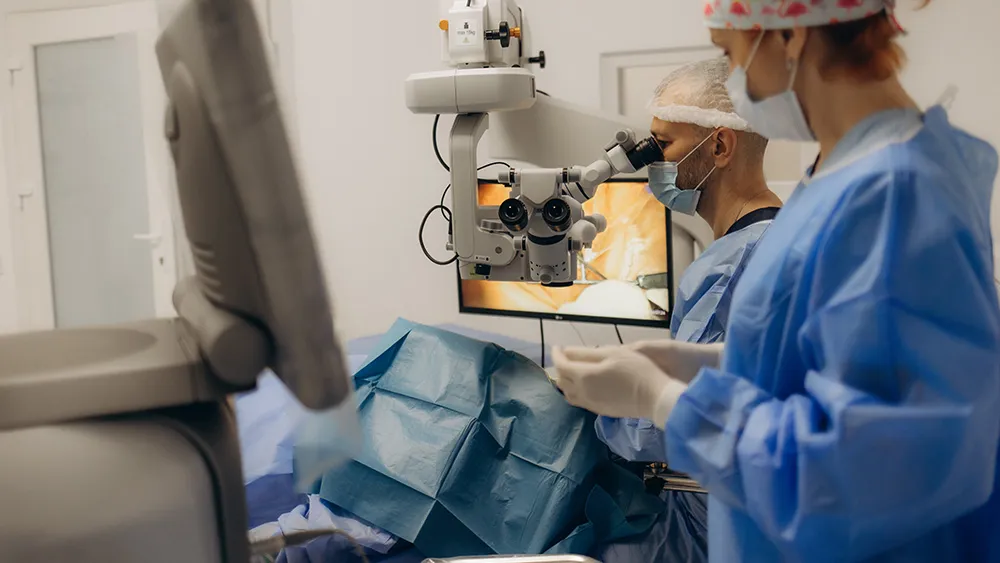
Real-Time Eye Tracking. Your eye’s position is monitored throughout your procedure, keeping every laser pulse accurately placed.
Prescription History Review. We confirm your eyes have genuinely stabilized before we ever recommend moving forward.
Follow-Up Visits. Built-in checkpoints in the weeks after your procedure catch issues with flap healing or early inflammation quickly.
Backed by Research: A 2016 analysis of FDA data found that newer laser platforms significantly reduce unwanted side effects compared to older-generation lasers. It’s why Florida Eye Custom Vision uses all-laser, blade-free technology for every LASIK procedure.
Once they’ve done the research, these are the questions patients want answered before booking.
Patients with unstable prescriptions, thin or irregular corneas, uncontrolled dry eye, or certain autoimmune conditions are generally not good LASIK candidates, and corneal mapping and diagnostic testing during your consultation are what catch these factors before surgery is ever recommended.
Yes. Higher prescriptions require more corneal tissue removal, so the cornea that’s left behind is thinner, and this can carry a higher chance of needing an enhancement or experiencing regression later. That’s why we check your corneal thickness and prescription history so carefully beforehand.
Most side effects, like dry eye or glare, appear during the first few months of healing. LASIK risks like corneal ectasia or gradual myopic regression can develop more slowly over years, which is part of why long-term follow-up care matters even after your eyes have fully healed.
Patients with higher risk factors for flap-related complications are often better suited to PRK or SMILE instead of LASIK, and we’ll walk you through that option if it’s the better fit for your eyes.
If you’re in Jacksonville or Northeast Florida and want a clear, honest picture of your own LASIK risk, book a personalized consultation. Our fellowship-trained surgeons will map your corneas, review your history, and tell you plainly whether you’re a strong candidate. Call (904) 268-3937,schedule your consultation online, or contact our team with any questions, and take the first step toward knowing for sure.
Serious complications (0.4% of eyes) and permanent vision loss rate: EyeWiki (AAO), “LASIK Complications.” URL:https://eyewiki.org/LASIK_Complications
Dry eye incidence (28% new onset at 3 months): Eydelman et al., JAMA Ophthalmology, 2017, via AAO EyeNet. URL:https://www.aao.org/eyenet/article/postoperative-symptoms-satisfaction-with-lasik-sur
Infection rate (1 in 1,000 to 1 in 10,000) and comparison to contact lens wear: Solomon et al. (ASCRS survey) and Masters et al., both via PubMed. URLs:https://pubmed.ncbi.nlm.nih.gov/14604725/ and https://pubmed.ncbi.nlm.nih.gov/28317680/
Corneal ectasia incidence (0.04% to 0.6%): EyeWiki (AAO), “Ectasia After LASIK.” URL:https://eyewiki.org/Ectasia_After_LASIK
Myopic regression, long-term stability: 10-year and 12-year LASIK follow-up studies, PubMed Central. URLs:https://pubmed.ncbi.nlm.nih.gov/18154754/ and https://www.ncbi.nlm.nih.gov/pmc/articles/PMC5449750/
Cross-linking and phakic lens treatment for post-LASIK ectasia: He et al., Journal of Refractive Surgery, 2020, via PubMed. URL:https://pubmed.ncbi.nlm.nih.gov/32032431/
Newer laser platforms reducing side effects (2017 FDA data analysis): American Academy of Ophthalmology, “Facts About LASIK Complications.” URL:https://www.aao.org/eye-health/treatments/facts-about-lasik-complications
We use cookies to optimize site functionality, personalize content, and analyze our traffic. We also share data with our trusted analytics and advertising partners. You can adjust your consent settings at any time. Read our Privacy Policy and Cookie Policy to learn more.