

Formerly Maida Custom Vision | Serving Northeast Florida since 1995
Formerly Maida Custom Vision | Serving Northeast Florida since 1995
Two Jacksonville patients walk into our office with identical prescriptions and similar lifestyles, yet one leaves with LASIK scheduled while the other chooses PRK. How can the same vision problem require different solutions? The answer lies in understanding that successful vision correction isn’t just about fixing refractive errors; it’s about matching surgical technique to your unique corneal anatomy, profession, and life goals. Whether you’re a busy downtown professional or a first responder, learning about LASIK vs. PRK ensures you make the right choice that transforms your vision and quality of life.
While both procedures use identical excimer laser technology to reshape your cornea and correct the same vision problems—nearsightedness, farsightedness, astigmatism, and presbyopia—they approach the treatment area through different methods, affecting your recovery experience and long-term results.
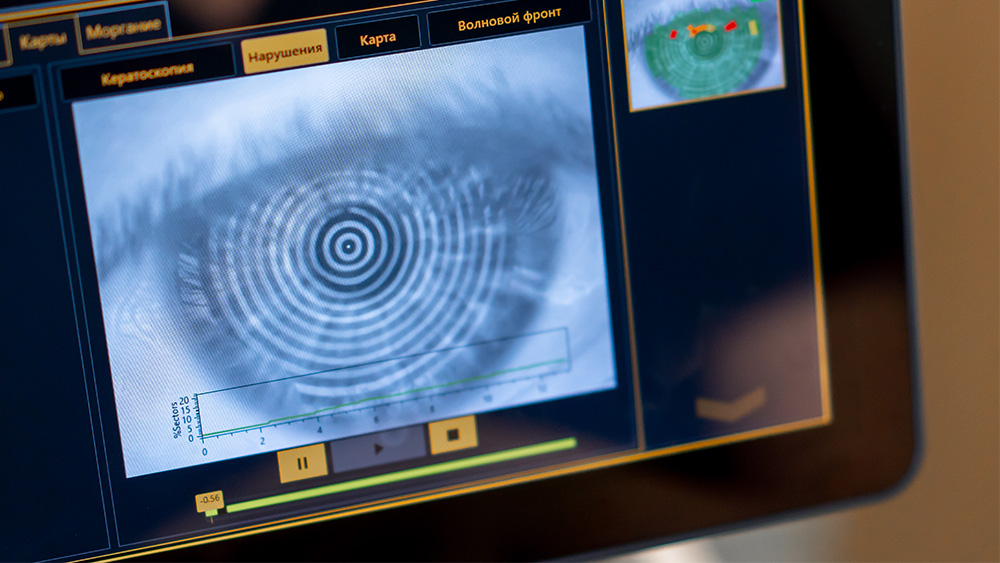
The answer to which is better, PRK or LASIK, isn’t found in procedure superiority, as both deliver identical long-term vision outcomes. Instead, the choice depends on 4 key factors our surgeons evaluate during your comprehensive consultation using advanced diagnostic tools, including OrbScan, EyeSys, Pentacam, and Optical Coherence Tomography:
We measure corneal thickness using our Pentacam and OCT technology to determine if your eyes have enough tissue for flap creation (LASIK) or require maximum preservation (PRK). Patients with thinner corneas and higher prescriptions (-8+ diopters) often benefit from PRK’s conservative approach.
If you are in a high-impact career like military service, law enforcement, firefighting, or professional athletics, PRK is often recommended to eliminate any risk of flap displacement. Meanwhile, office professionals and healthcare workers prefer LASIK for a rapid return to work.
Your recovery speed preference is a determining factor. Active individuals wanting immediate visual function (busy parents, executives, or athletes) prefer LASIK vs. PRK for its overnight recovery. Those who can accommodate gradual improvement select PRK for its conservative tissue management.
Your medical history influences outcomes, so we examine your dry eye history (PRK preferred due to less nerve disruption than LASIK’s flap), previous eye surgeries (PRK preserves altered structure), and corneal irregularities.
Curious about cost? Both procedures typically cost $2,000-$3,000 per eye, with financing options available.
Over 99% of our patients achieve 20/40 vision or better when properly matched to the procedure that suits them best.
LASIK Candidates:
PRK Candidates:
Quick Decision Guide: “Choose LASIK if you have thick corneas and need to quickly return to your active lifestyle with minimal disruption. Choose PRK if you have thin corneas, work in the military, as a first responder, or competitive athlete, and need maximum corneal preservation and structural durability. Still unsure? Book a consultation.”
Recovery experiences vary between LASIK vs. PRK, affecting your daily routine and return to normal activities.
| Recovery Milestone | LASIK | PRK |
| Clear Distance Vision | 24-48 hours | 3-7 days |
| Return to Office Work | 1-2 days | 3-5 days |
| Resume Exercise | 1 week | 2-3 weeks |
| Drive Safely | Next day | 3-7 days |
| Complete Stabilization | 1-2 weeks | 1-3 months |
LASIK provides immediate comfort through flap protection, enabling computer work within hours and full activities within days, while PRK requires 3-5 days of bandage contact lens wear with light sensitivity before rapid improvement.
If you’re in Jacksonville, St. Johns, or Northeast Florida and think you’re a candidate for LASIK vs. PRK, trust Florida Eye Custom Vision’s expert guidance to determine your optimal choice. Our board-certified, fellowship-trained surgeons, Dr. Amit Chokshi and Dr. Akbar Hasan, combine internationally recognized expertise with thousands of successful procedures to ensure your selection delivers exceptional safety and results. Call (904) 268-3937 or schedule your consultation online and experience the difference expert guidance makes in achieving a crystal-clear vision.
We use cookies to optimize site functionality, personalize content, and analyze our traffic. We also share data with our trusted analytics and advertising partners. You can adjust your consent settings at any time. Read our Privacy Policy and Cookie Policy to learn more.